Showing posts with label Applied Science. Show all posts

Why do air bubbles cling to the walls of a vessel when water is heated?


When water is heated, steam bubbles out. Apart from the energy required to heat up to the boiling point (about 100 °C) and the latent heat, additional energy is required (due to surface tension) to form the bubbles since they have a free surface.Pressure inside a bubble is higher than that in the surroundings by an amount 2 T/R, where T is the surface tension coefficient and R is the radius of the bubble. If R is very small this additional pressure can be very large. Hence the bubbles are usually formed where the hot vessel surface is rough and has crevices. 

One can observe boiling water on a stove where the steam bubbles rise from a rough horizontal surface of the vessel. When the bubbles rise due to buoyancy they grow in size and when they are located over the water surface they are formed by a film and have two free surfaces an inside one and an outside one. Additional pressure inside the bubble is then given by (4 T/R) due to two surfaces. Interesting things happen here. This liquid film is fragile and can easily break unless it is made up of milk or oil or soap water. When a bubble comes close to another bubble or an object it gets attracted and clings to it because of surface tension. We can see bubbles clustering on the free surface of coffee. The bubbles in the interior of the water body cling to the wall and have the shape of a truncated sphere. To detach them, there is a need to increase their surface area, which needs additional work. Thus they stick to the wall because of surface tension, resisting buoyancy force or any other disturbance. Since they do not have a film they do not break.Such bubbles can be a great nuisance in a water flow experiment when observations are to be made through a glass window, for example, by shining a laser beam. Bubbles arising from the dissolved air and sticking to the glass window cannot easily be removed even by increasing the water flow rate. They need internal mechanical wiping.

Source: thehindu.com

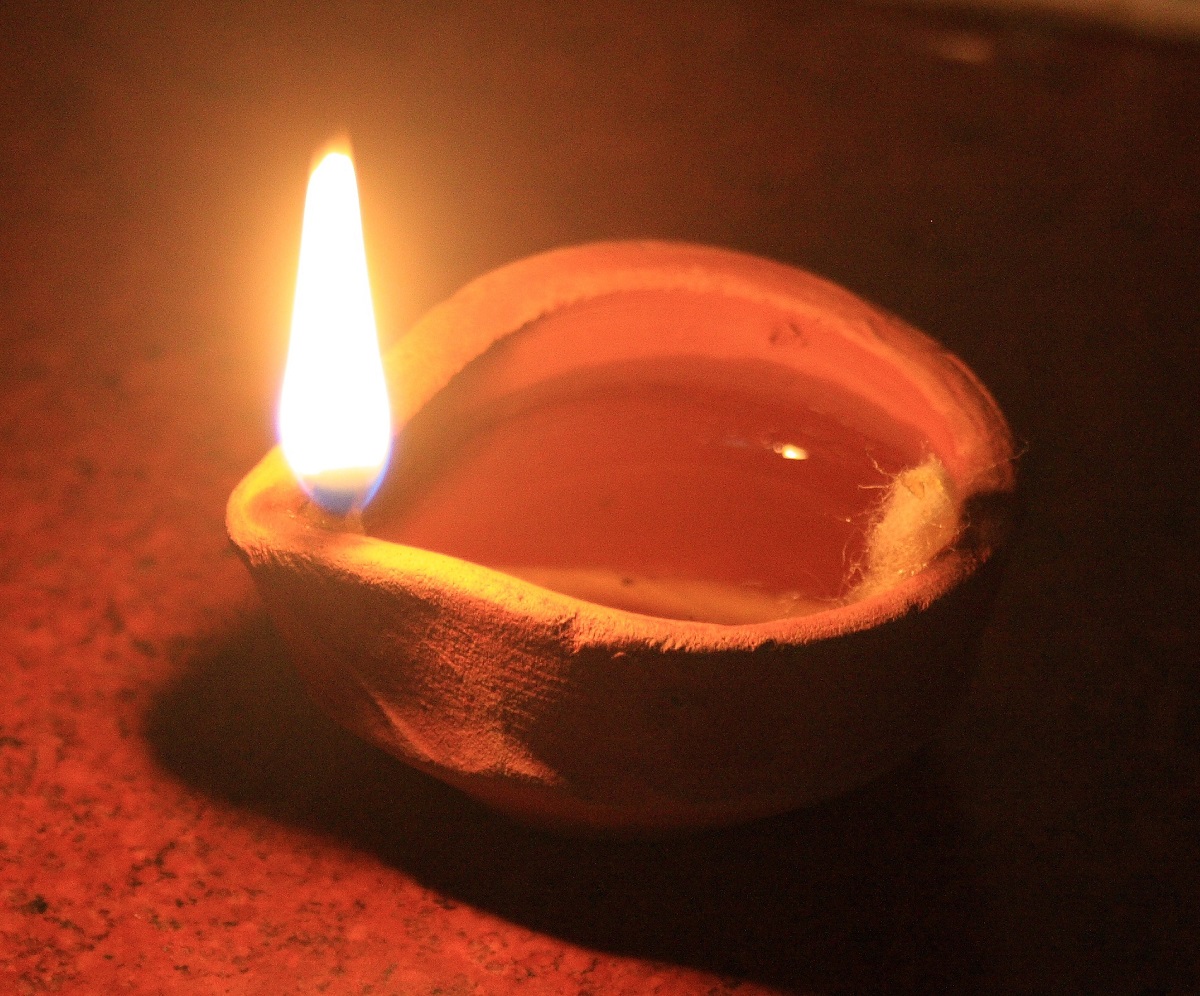
Why does the tip of a wick (made of thin cotton) of a lamp emit smoke with a certain smell while extinguished when oil in the lamp is exhausted, though the rest of the wick is still soaked in oil?


Image source: en.wikipedia.org

Let us see how a lamp emits light. The wick is soaked in oil. It has interstitial voids in its thread, in which the oil rises by capillary action. At the tip of the wick, due to the heat of the burning flame the oil vaporises and burns easily. One thing to be noted is that, a flame is produced only when a gas burns. A burning liquid does not produce a definite and steady flame. It produces an unsteady and irregular flame unsuitable for illumination. So the oil slowly burns by a cycle of gradual capillary suction, vaporisation and inflammation. When the oil is exhausted or if the flame is put off, a smoke with certain smell is produced due to unburnt oil particles, soot and ash of the wick. These particles are carried away with the combustion products, such as carbon dioxide and carbon monoxide and cause a characteristic smell. The rest of the wick in contact with the oil does not get burnt out due to the simple reason that it has not attained its ignition temperature when it is still soaked in oil.

Source: thehindu.com

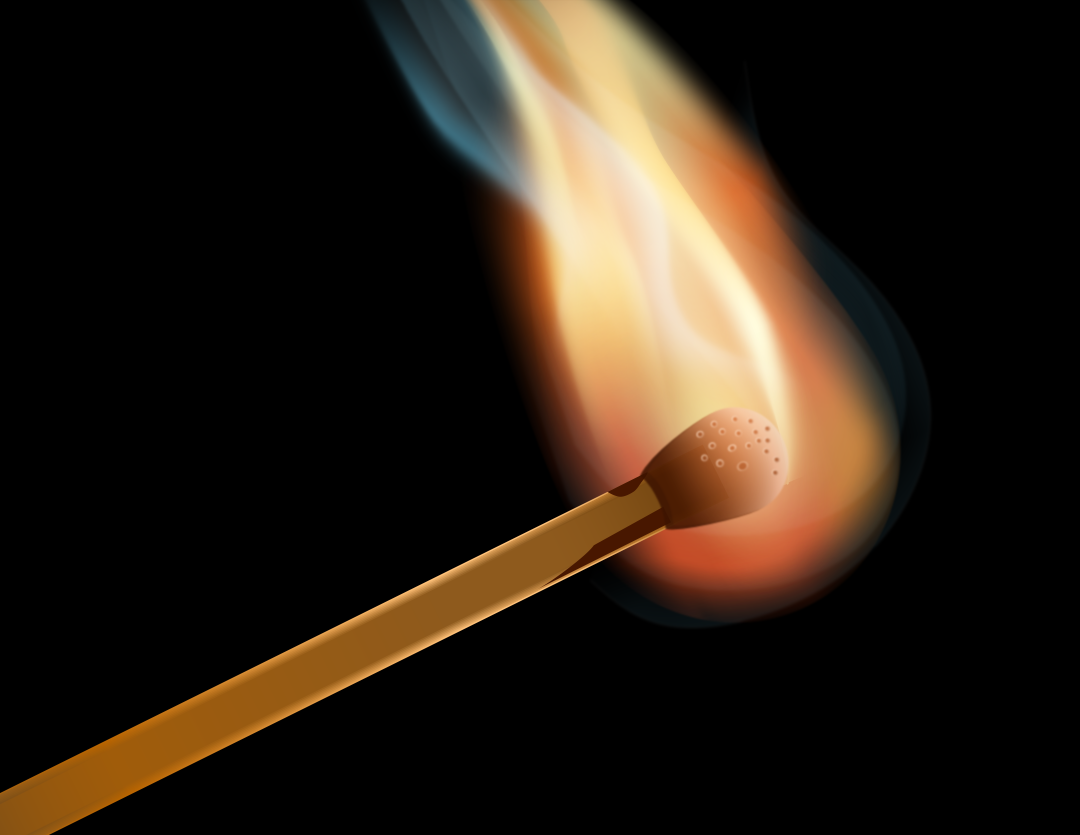
Which gas is emitted when a matchstick is lit?


The type of gas that is emitted when a matchstick is lit depends on the material used in the matchstick heads. The usually used match stick heads are an admixture of red sulphur in major portion and red phosphorous in trace quantities.When the matchstick is struck on the box, the friction caused is sufficient to ignite the phosphorus. The combustion of phosphorus is exothermic and hence releases heat. The sulphur in the head in turn catches fire by reacting with atmospheric oxygen to give sulphur dioxide. The gas that is emitted, when an ordinary matchstick is lit, is, therefore, sulphur dioxide. The cellulose of the matchstick that is subsequently burnt emits CO{-2}gas. . In matchsticks, such as those used in Diwali fireworks, a variety of chemicals, in minimal quantities, are used for a variety of colours and a sparkling effect.

Source: thehindu.com

What are the differences between an ordinary soap and detergent in composition and action?

Soaps are sodium or potassium salts of long chain carboxylic acids (fatty acids) whereas detergents are salts of long chain sulphates or sulphonates. Hence, soaps and detergents have a long organic tail with a (negatively charged) polar head, that is, they are anionic in nature. The organic tail is hydrophobic (water-hating) but lyophilic (oil-loving) whereas the polar head is hydrophilic (water-loving) and lyophobic (oil-hating).The cleansing action of both detergents and soaps is about the same.


Dirty clothes and skin have oily layers. Simple wetting and rinsing of such clothes and skin would not remove the dirt because the oil is immiscible in water. When a detergent or soap is used along with water, the lyophilic tails of the detergent species tag on to the oily layer while the hydrophilic heads face the water. The agitation causes the oily matter to break into small droplets and is trapped inside the lyophilic `cage' formed by the detergent molecules. Thus the oily matter is kept suspended in water. The structure formed by the detergent molecules where the oil is trapped is called a micelle. The role of the detergent molecules is to prevent the oil droplets from coalescing once again and returning to the cloth. The differences between soaps and detergents stem from their sensitivities to hard water and acidic conditions. When hard water (which contains magnesium and calcium ions in more than permitted levels) is used, the soap precipitates out as calcium or magnesium salts. On the other hand, the detergents are less prone to complexation with the metal ion and hence would be less affected by the hard water. Likewise, the soap would precipitate out under acid conditions as the carboxylic acid group would be protonated, while the detergent would survive acidic conditions better.

Source: thehindu.com

Why do bubbles form around a straw when it is inserted into a carbonated drink?

Answer 1: 


Carbonated drinks are supersaturated aqueous solutions of carbon dioxide in closed bottles. The solubility of carbon dioxide in carbonated drinks strongly depends on pressure and temperature; the solubility being higher at higher pressures and lower temperatures. Any changes in pressure or temperature of the solution would correspondingly affect the carbon dioxide concentration in the solution. When a straw is immersed in the carbonated drink, the temperature of the straw being higher than the solution, it results in an increase of the temperature of the solution around the straw. Consequently, some of the gas would be liberated from the solution, as the solubility of the carbon dioxide is lower at the higher temperature. The straw provides an adsorptive surface for the exiting carbon dioxide molecules to sufficiently pile up to form bubbles and hence bubbles appear on the straw when it is immersed in carbonated drinks.

Answer 2:

Carbonated drinks are saturated solutions of carbon dioxide under high pressure (a few times higher than atmospheric pressure). When the chilled soft drink bottles are uncorked, the pressure within the bottle decreases and the temperature of the soft drink increases gradually.Due to these two reasons, the solubility of carbon dioxide in the soft drink decreases, leading to effervescence and escape of carbon dioxide.By inserting a straw, the solubility of carbon dioxide around the immersed part of the straw decreases and mild effervescence and bubbles are formed on the straw and the bubbles stick to the straw due to adhesive forces.Plastic straws have a specific property to adsorb bubbles. This property is more significant in PET (poly ethylene terephthalate) and hence these bottles serve as good containers to store aerated drinks to retain flavor and fizz. Some of us can try and see whether straws made of glass can adsorb bubbles just like plastic straws.

Source: thehindu.com

Why does magnesium react mildly with cold water but vigorously with hot water or steam producing magnesium hydroxide and hydrogen?

Magnesium, being an alkaline earth rare earth (s-block) metal, reacts with water more actively than most other transition (d-block) metals such as iron, copper, zinc, etc do. Yet the reaction is slower compared with the alkali metals such as lithium, sodium and potassium, which react violently with, even ice-cold water. 

Image source: en.wikipedia.org

Magnesium reacts with water to give magnesium hydroxide and hydrogen as follows:Mg+2H{-2}O -> Mg(OH){-2}+H{-2}Normally Mg is coated with a thin layer of its oxide (MgO) when it is exposed to air. This layer induces passivity to Mg in its reaction with water.The rate of any reaction depends on the kinetic energy of the reactants (chemicals participating in the reaction). In other words, the reactants can transform chemically only when they possess a minimum kinetic energy known as `activation energy.' According to the Boltzmann distribution of energies, and the Arrhenius theory of reaction rates, the number of entities possessing activation energy and hence the reaction rate increase with increasing temperature. Therefore, we can say that the above reaction happens more speedily with hot water and steam. In cold water neither the activation energy is supplied nor the oxide layer is disturbed to promote further reaction of magnesium.The rate of any chemical reaction is also accentuated by factors that destabilise the reactants and those that remove the products from the scene of the reaction or stabilise the products.

The hydrogen atoms produced, are initially adsorbed on the surface of magnesium metal before they leave as hydrogen molecules. Thus, the metal surface is dynamically dressed by hydrogen atoms and thereby screened from further attack by water.Hence, the reaction is mild in cold water. When the magnesium metal is exposed to hot water or steam, the temperature of the metal increases and its interatomic bonds loosen (destabilise) making the magnesium atoms to give away their electrons more readily.Besides, the hydrogen atoms produced, are not effectively adsorbed on the hot surface of the magnesium metal and the metal is, thereby, continuously exposed to the attack of hot water molecules. Further, in hot water, the water molecules are more ionised (destabilised) giving more number of hydrogen ions to accept the electrons and more hydroxide ions to form the stable magnesium hydroxide. Hence, the reaction is vigorous in hot water and in steam.Another equally important reason for the vigorous reaction in hot water is that the produced hydrogen gas is more thoroughly expelled from the layer of magnesium than in cold water due to the prevailing turbulence and also as gases are generally less soluble under hot conditions in liquids.

Source: thehindu.com

Why does water tend to form a circular region void of itself around a small piece of soap, present on bathroom tiles, having a very thin layer of water?


Image source: minimalisti.com

This is because of decrease of surface tension of water due to the soap contamination. Due to surface tension the free surface of the water film on a tile is in a stretched state. It is like a rubber sheet pulled all around. If a particular region gets weak it yields. In the case of a water film this tension decreases due to addition of soap and water in this region gets pulled to the regions around where surface tension is higher. Notice that the pull is concentrated near the free surface of the film but the whole layer gets pulled.A similar experiment can be demonstrated in your kitchen with a thin water layer on a thin metal plate and gently warming the plate locally from the other side, say using your thumb or on a candle. Surface tension decreases if temperature increases and again we see water being expelled away from the heated area.Due to the surface tension thin water layers on kitchen utensils or laboratory glassware tend to form lumps or drops and drain out from the surface. But pushing this phenomenon to its logical end one may ask why we see liquid films, say on bathroom tiles, at all. Each film should be inherently unstable due to slight variation of impurities or temperature. Tile surface roughness and also the liquid free surface near the edges of the voids not being exactly flat when it thins comes to the rescue of the film. Hence even though a void appears to be formed an extremely thin water layer remains.

Source: thehindu.com

A fly in mid-air in the front side of a moving vehicle should come back to the rear side. But the fly remains in the same location in the air. How?

All objects on earth, including men, insects, buses, trees, buildings, lakes and atmospheric air are struck to earth’s gravity because the latter operates a force towards the centre of the earth from the centres of gravity of each of the objects in the earth’s gravitational field. Since the gravitational attraction among the objects is negligible in comparison to the gravitational pull the earth exerts on each object in its field, the mutually relative positions of these objects remain unchanged. Thus, the earth provides an inertial frame of reference for the objects it holds in its field. The mutual and relative positions of the objects would change only when one or more of these objects make a resultant displacement overcoming the gravitational pull.

Image source : spirit-animals.com
According to Newton’s First Law of Motion, an object in stationary state or one in a state of uniform velocity in an inertial frame of reference will continue to be in that state unless and until a force acts on it. This retention of state in the absence of a net force is called the inertia of the object, originating by its own mass. Thus, all the parts and material objects physically linked to the vehicle’s framework retain their positional coordinates as long as they do not make any relative displacement with respect to the vehicle’s internal inertial frame of reference. When a vehicle is moving with certain speed, the objects, materially connected to the vehicle, also move along with the vehicle due to inertia as the whole vehicle serves as the inertial frame of reference. These objects include not only the passengers, seats, luggage, etc., but also the air inside it.

An insect is no exception for this inertial influence. It needs air to fly and the air it flies in is also moving with the same speed as the bus. If the fly does not make any forward or backward movement it remains in the same location because the fly is materially (and inertially) connected to the vehicle through the air. Imagine stationary vehicle with its air removed by evacuation before a (super) fly is suspended in the bus with no forward or backward movement. If the vehicle, then suddenly, commences a forward movement, the fly would really hit the back of the vehicle because now there is no air that goes along with the vehicle holding the fly, materially and inertially stuck to the vehicle’s frame of reference.